
Skip to content
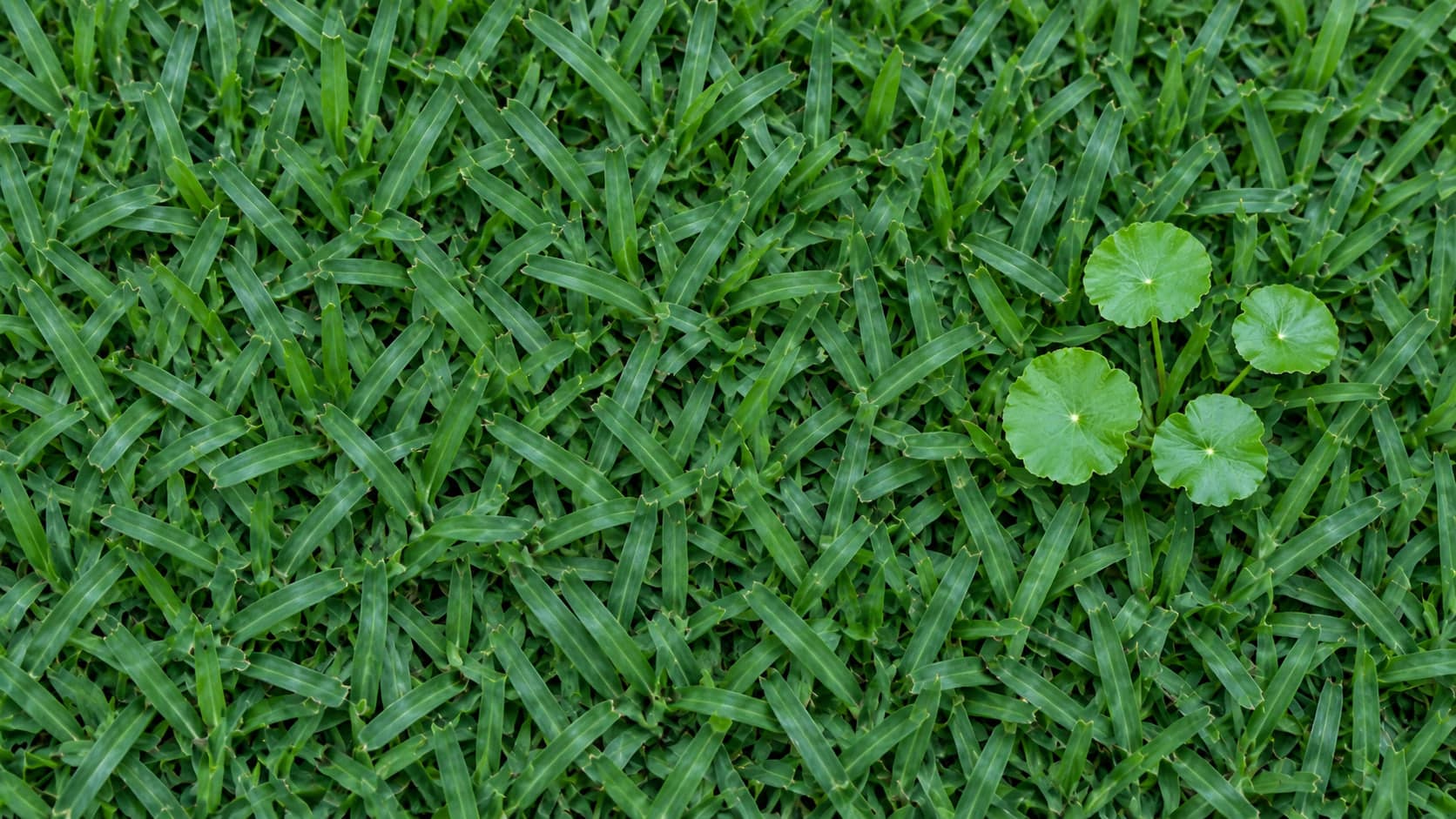
Dollarweed’s round, scalloped leaves poking up through a St. Augustine lawn.

Stop weeds before they sprout.

A pre-emergent barrier in late winter and fall keeps weed seeds from rooting. Post-emergent treatments go after the ones already up, without hurting your St. Augustine.

Weeds we know by name

Collected in Houston and along the upper Texas coast, 1899–1945.
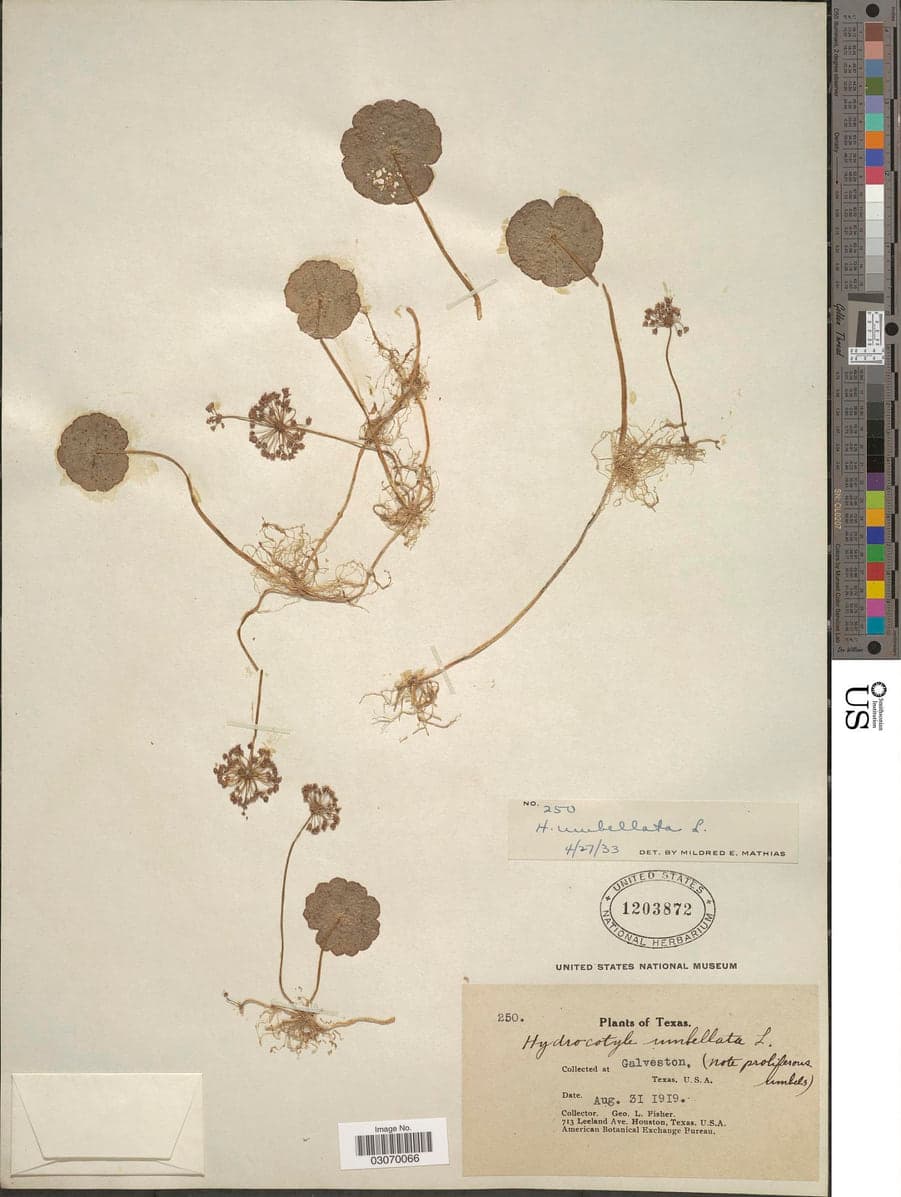
  • Herbarium sheet: a pressed dollarweed plant with round, scalloped leaves on long stalks and small, ball-shaped flower clusters.

    Dollarweed

    Hydrocotyle umbellata

    Galveston ·

    A water lover. Where it spreads, the soil is staying too wet.
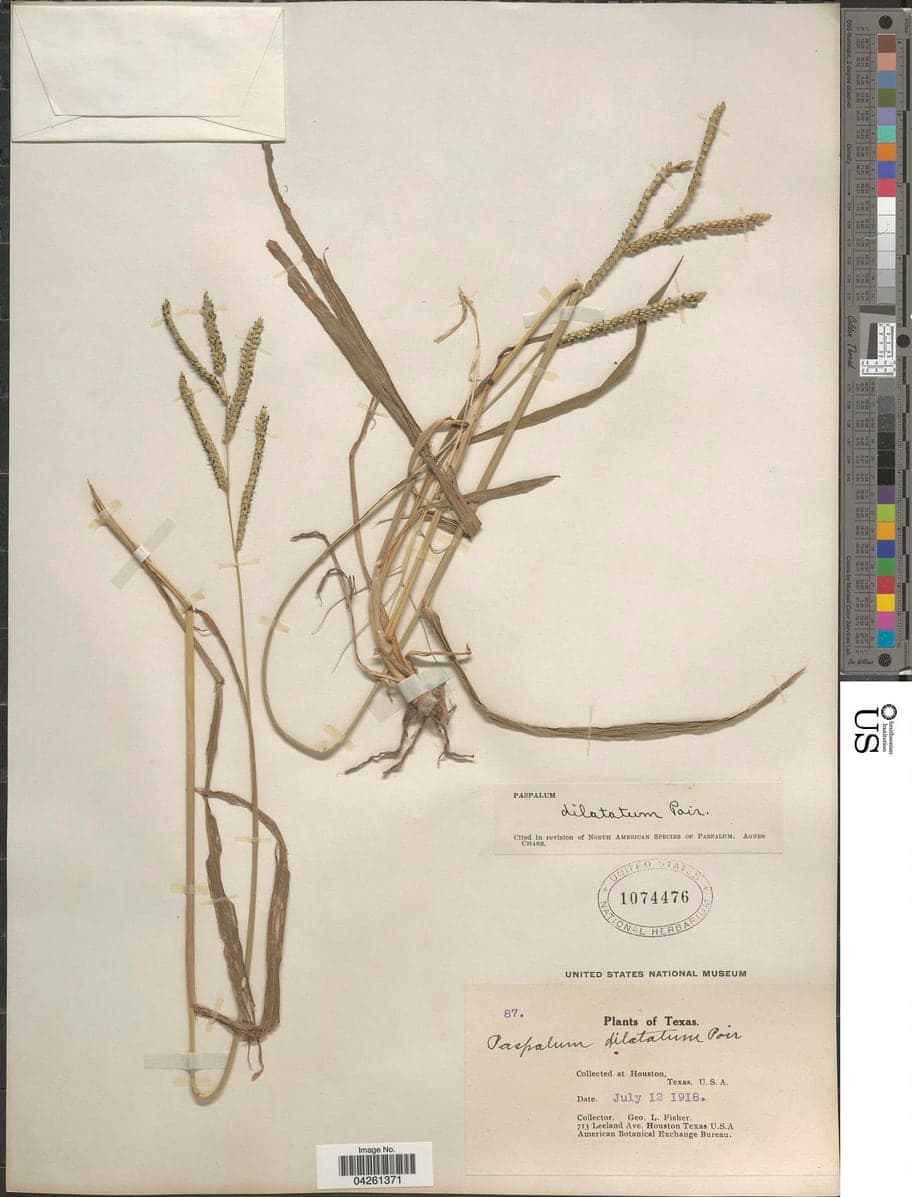
  • Herbarium sheet: a pressed dallisgrass plant with long, flat blades and tall stems carrying branched, drooping seed heads.

    Dallisgrass

    Paspalum dilatatum

    Houston ·

    Coarse clumps that widen every year, with seed heads from late May to October.
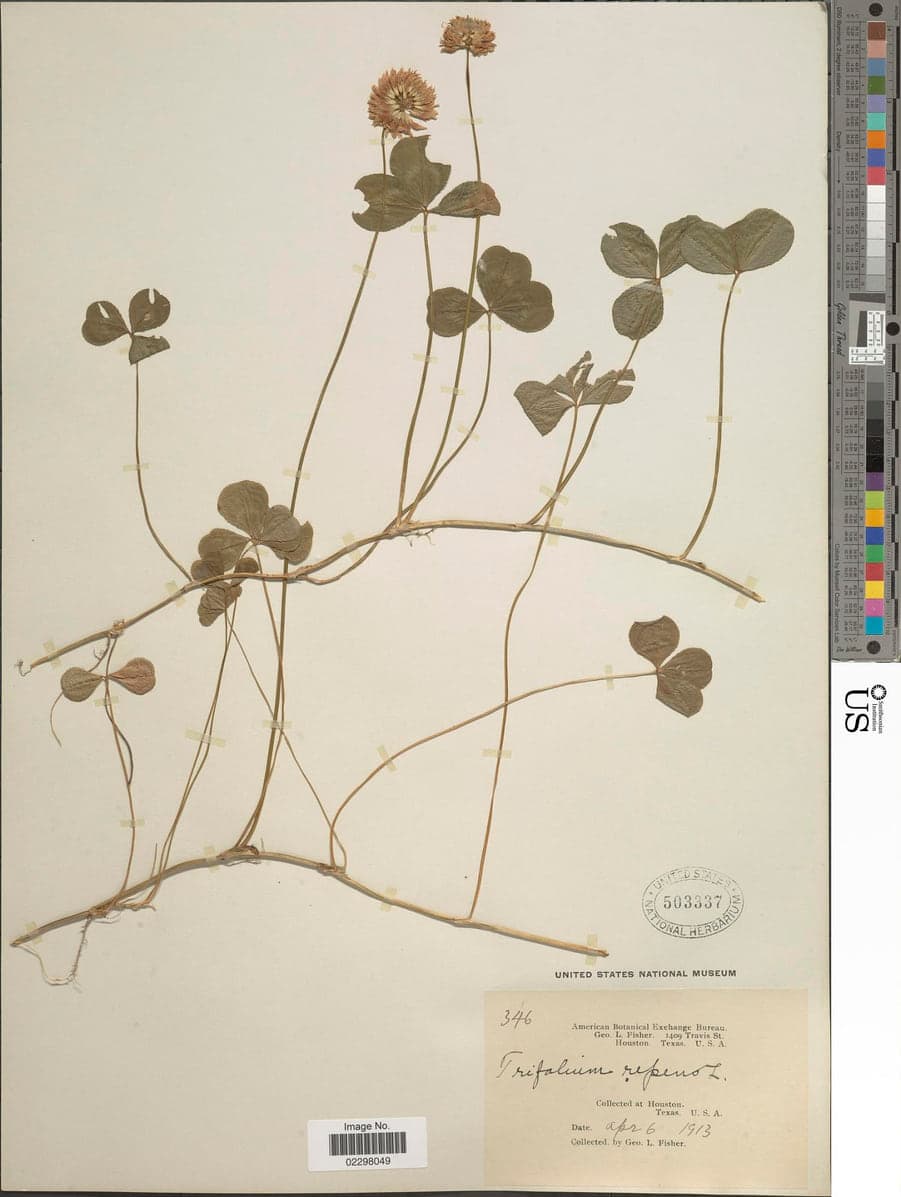
  • Herbarium sheet: a pressed white clover plant, creeping stems with three-part leaves on long stalks and two round flower heads.

    White clover

    Trifolium repens

    Houston ·

    Makes its own nitrogen, so it gains ground where a lawn is underfed.
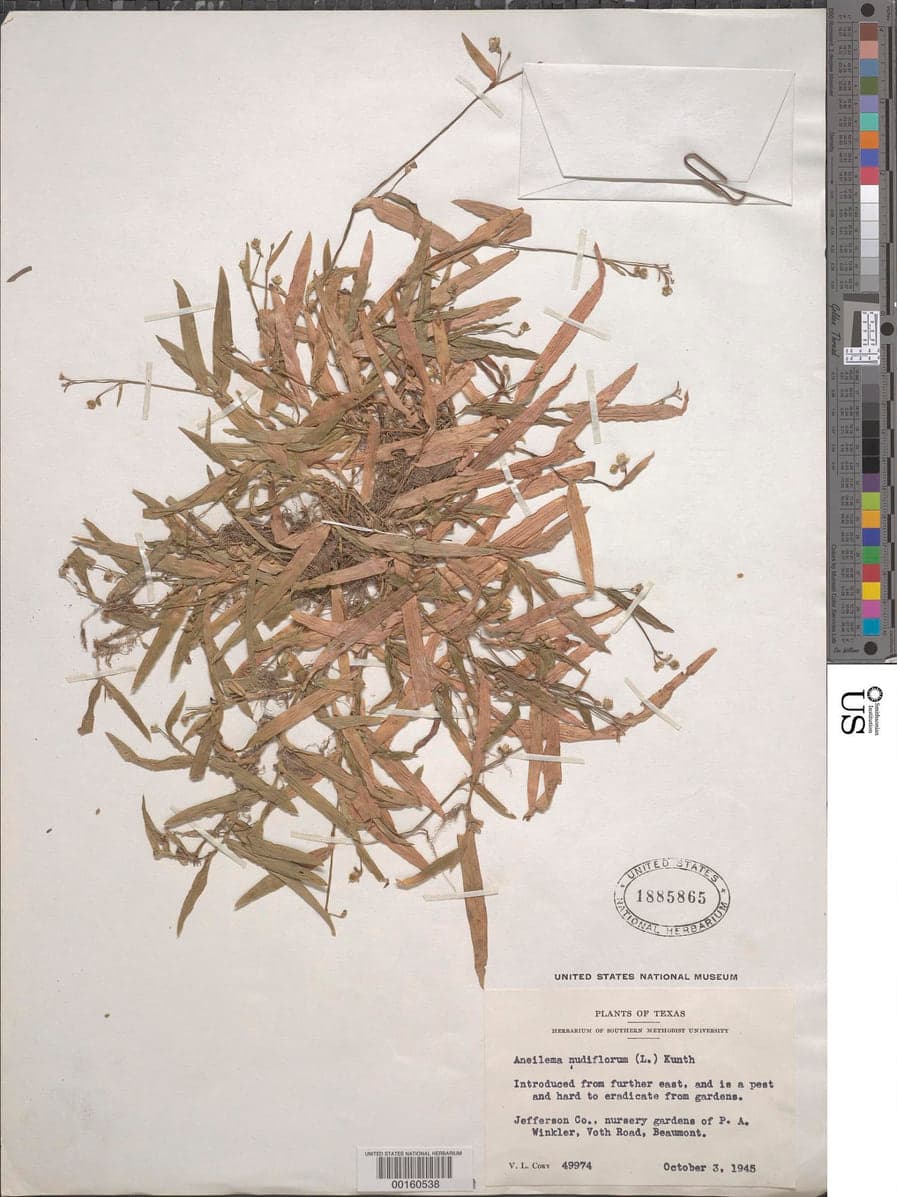
  • Herbarium sheet: a pressed doveweed plant, a dense tangle of narrow, pointed leaves dried to a pinkish brown.

    Doveweed

    Murdannia nudiflora

    Beaumont ·

    A summer weed of soggy ground: poor drainage, frequent rain or too much watering.
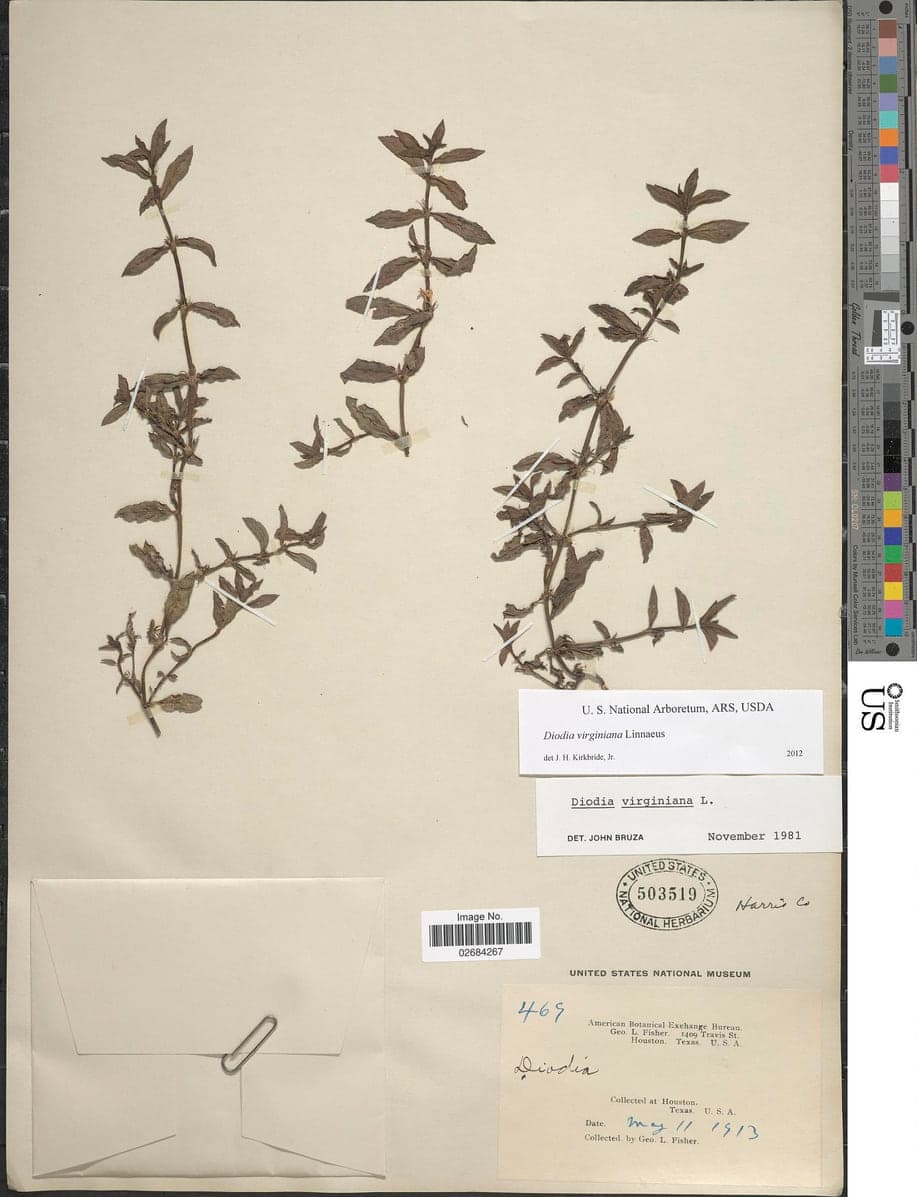
  • Herbarium sheet: pressed Virginia buttonweed, branching stems lined with pairs of narrow, pointed leaves.

    Virginia buttonweed

    Diodia virginiana

    Houston ·

    A deep-rooted perennial of soggy spots. Mowing spreads it: cut stem pieces root again.
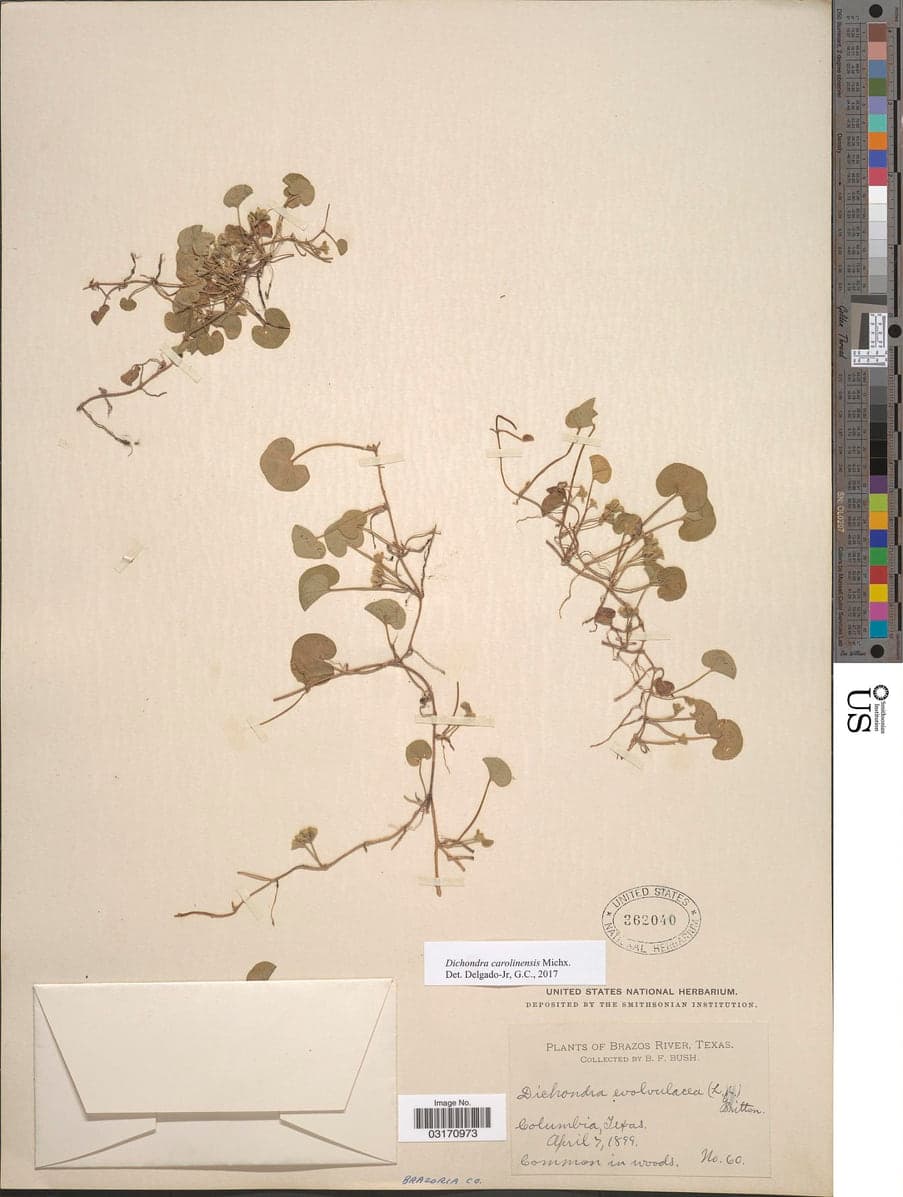
  • Herbarium sheet: pressed dichondra, small kidney-shaped leaves on thin creeping stems.

    Dichondra

    Dichondra carolinensis

    Brazoria County ·

    Kidney-shaped leaves on creeping stems that root as they go, filling in where turf is thin.
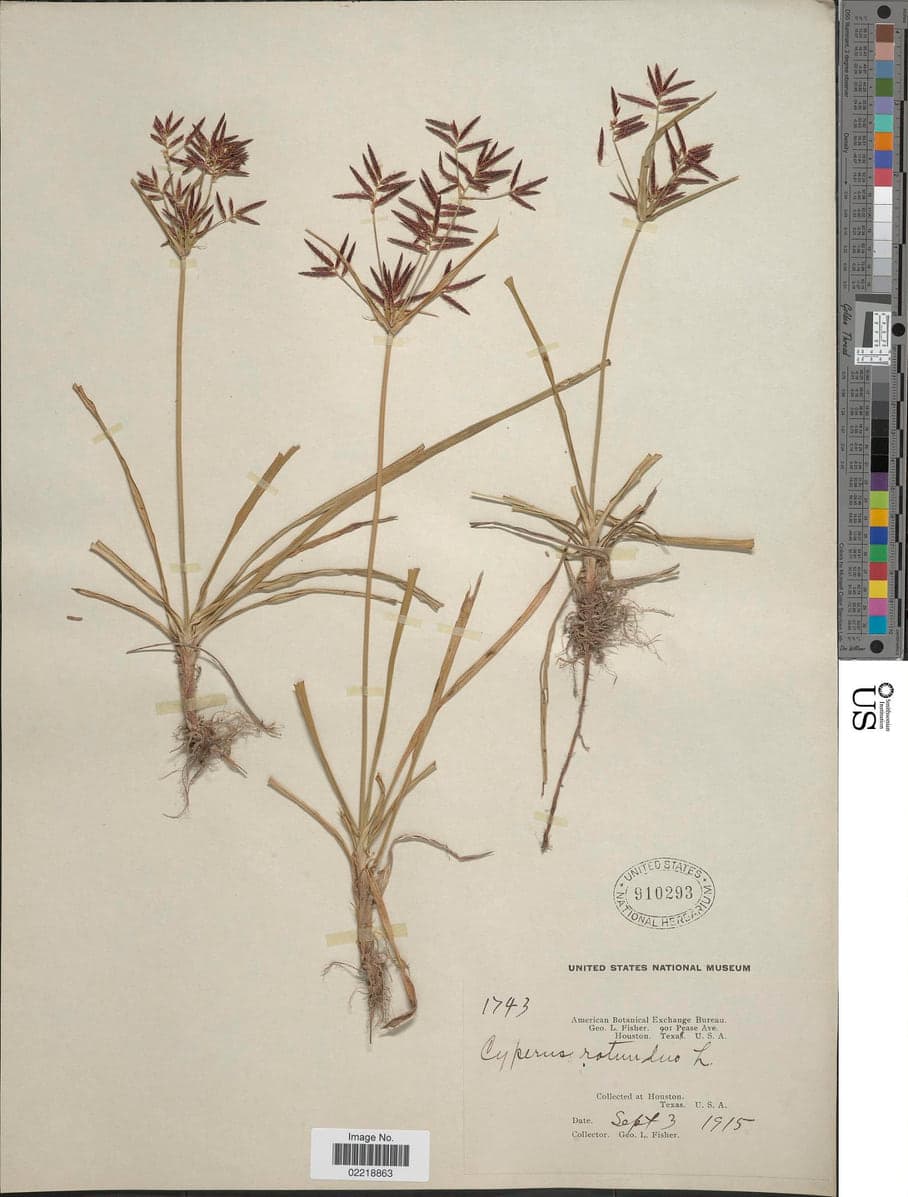
  • Herbarium sheet: pressed purple nutsedge plants, grass-like leaves under tall stems topped with spreading reddish-purple seed heads, roots at the base.

    Purple nutsedge

    Cyperus rotundus

    Houston ·

    Not a grass but a sedge, with triangular stems. Chains of underground tubers start new plants, and it likes moist ground.

Herbarium sheets: Smithsonian National Museum of Natural History, United States National Herbarium (CC0). Notes: Clemson Cooperative Extension on dollarweed, white clover, doveweed, Virginia buttonweed and nutsedge; Texas A&M AgriLife Extension on dallisgrass; NC State Extension on dichondra.

Part of the 8-Step program

Weed control comes with the 8-Step Lawn Care Program, at no extra cost. The program feeds the lawn too, and a thick lawn leaves weeds less room.

All eight rounds

  1. Round 1 · February

    Pre-emergent, for the weeds that sprout in spring and summer.

  2. Round 2 · March

    Post-emergent on the weeds already up.

  3. Rounds 3–6 · April/May to September

    Weed control at every visit, on whatever has come up.

  4. Round 7 · October

    Pre-emergent again, for the weeds that sprout in fall and grow through winter.

  5. Round 8 · Nov/Dec

    Control for winter weeds.

See all eight rounds

Common questions

How much does weed control cost?
Weed control comes with the 8-Step program at no extra cost. The program is priced by lawn size, and most lawns run $70–$95 a visit. Your quote gives the exact price.
Pre-emergent or post-emergent: what’s the difference?
A pre-emergent goes down before weeds come up. It stops their seedlings as they sprout, so it works best on annual weeds that come back from seed each year, and it is not meant for weeds already growing. A post-emergent is sprayed on the weeds that are already up.
How long before I see results?
A pre-emergent works out of sight: you see it in the weeds that don’t come up. Weeds that are sprayed take 10 to 14 days to show full results. Tough perennials like dallisgrass often take several treatments over more than one season.
Will it hurt my St. Augustine?
Weed killers labeled for St. Augustine are made to take out the weeds, not the grass. Others aren’t labeled for it at all, and some varieties, like Floratam, are more sensitive than others, so we choose the product for your grass and follow the rate on its label.
Can I get weed control without the 8-Step program?
No, it comes only with the program. The program feeds the lawn as well as treating the weeds, and a thick, well-fed lawn leaves weeds less room: Texas A&M AgriLife calls healthy, dense turf the best defense against weeds.
What if weeds come back between visits?
Call or text us. If weeds your program covers come back between scheduled visits, we come back and treat them at no charge. Treatments take 10 to 14 days to show full results, so give a treatment that long before you call.
Can I mow after a treatment?
Yes, with a little timing: mow before a visit, or wait 24 to 48 hours after one.
Do I need to be home?
No. On service days, leave gates unlocked and keep pets inside. We leave a note after each visit with anything you need to know.
When can people and pets go back on the lawn?
Each product’s label sets how long people and pets should stay off a treated area, and we follow it. Your technician will tell you what that means for your treatment.

Tell us what’s coming up in your lawn.

We’ll price the 8-Step program for your lawn, weed control included.

  • Free service calls
  • Licensed & insured