
Found before your lawn shows it.
Chinch bugs, sod webworms, armyworms and grubs do their damage out of sight. We look for them at every visit and treat before the brown spots spread.
A Houston lawn’s field guide
Common St. Augustine pests
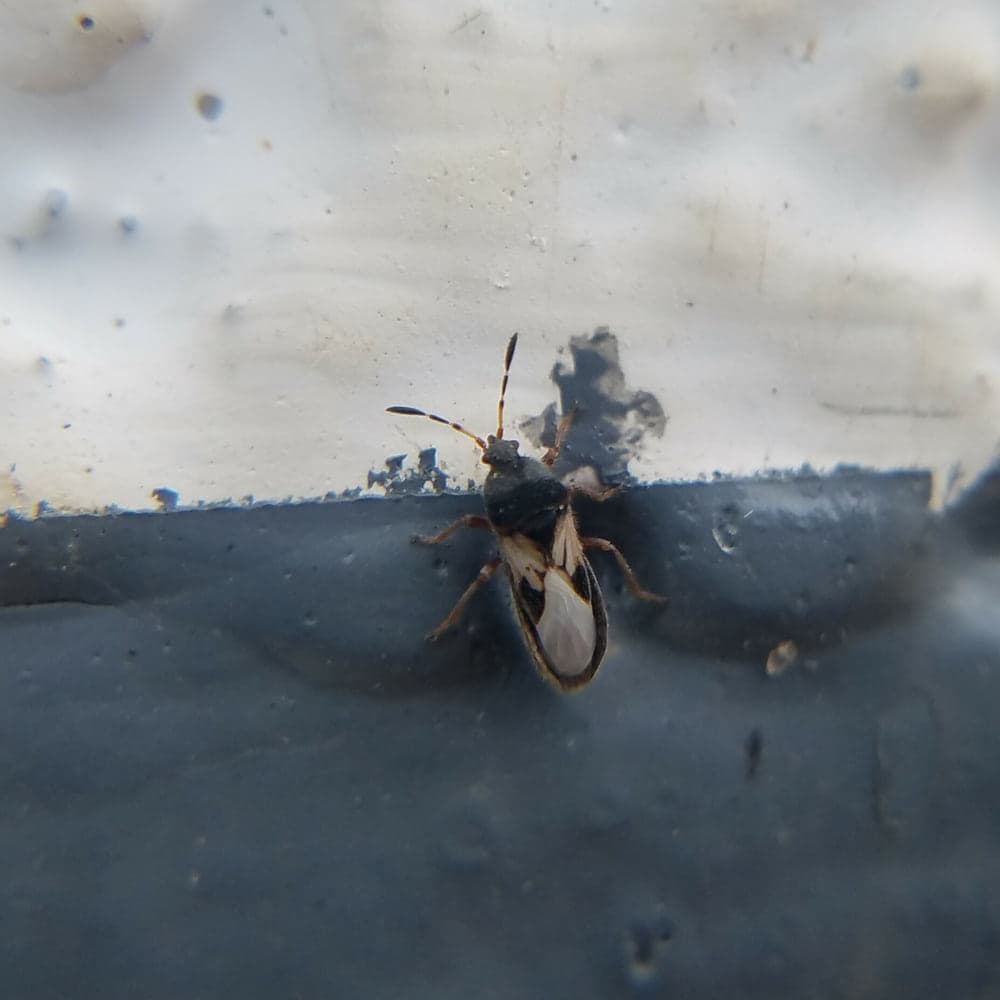
Southern chinch bug
Blissus insularis
Adult 3–3.6 mm
- When
- Summer, starting in sunny, dry spots and along the lawn’s edges.
- Signs
- Yellowing patches that spread outward and die in the middle. Easy to mistake for drought.
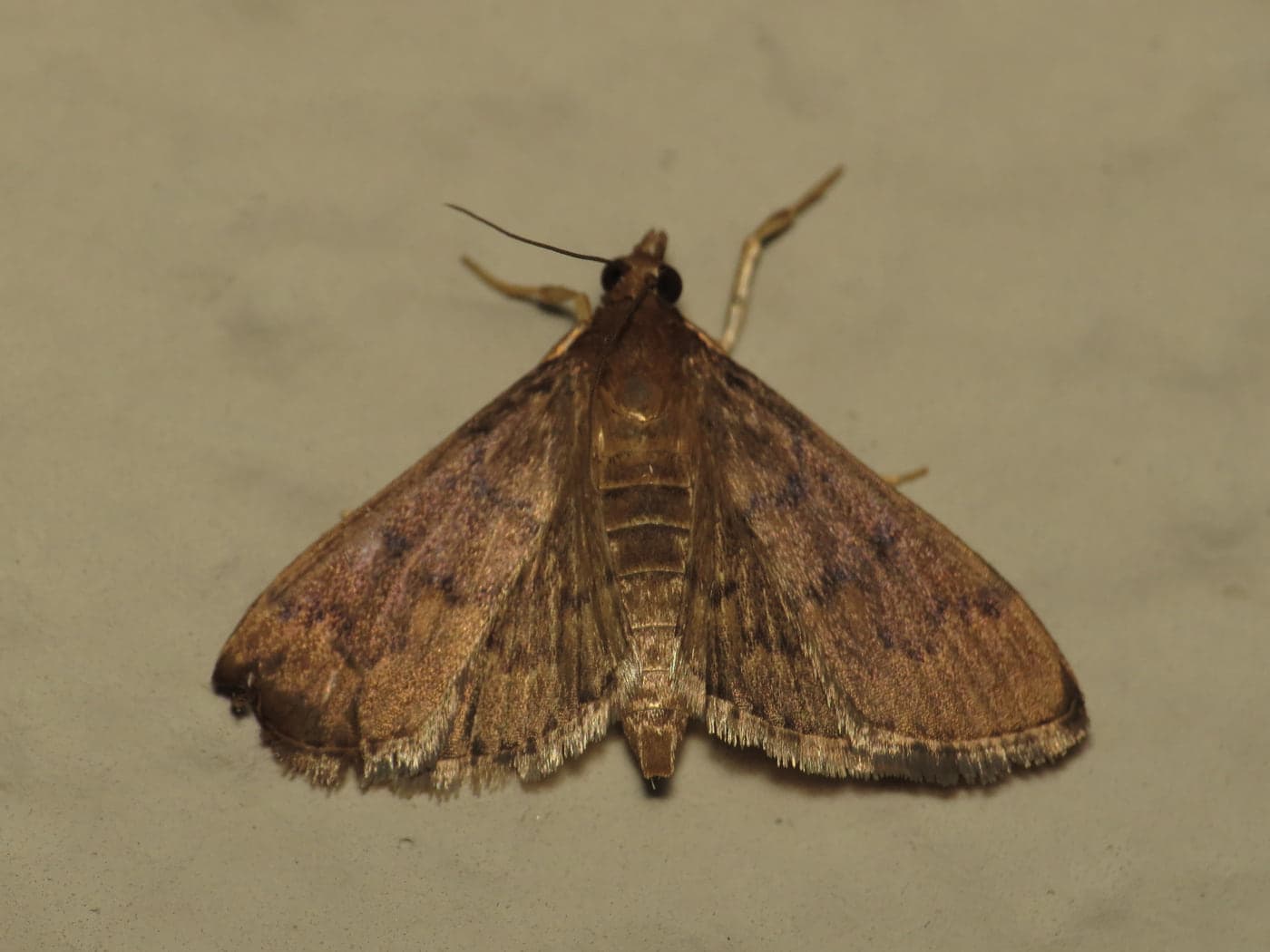
Tropical sod webworm
Herpetogramma phaeopteralis
Wingspan about 20 mm
- When
- Mid to late summer into fall. Larvae feed at night; the moths flutter up as you walk the lawn.
- Signs
- Notched blades, grass that looks mowed too short, bright green droppings, then thin, brown patches.
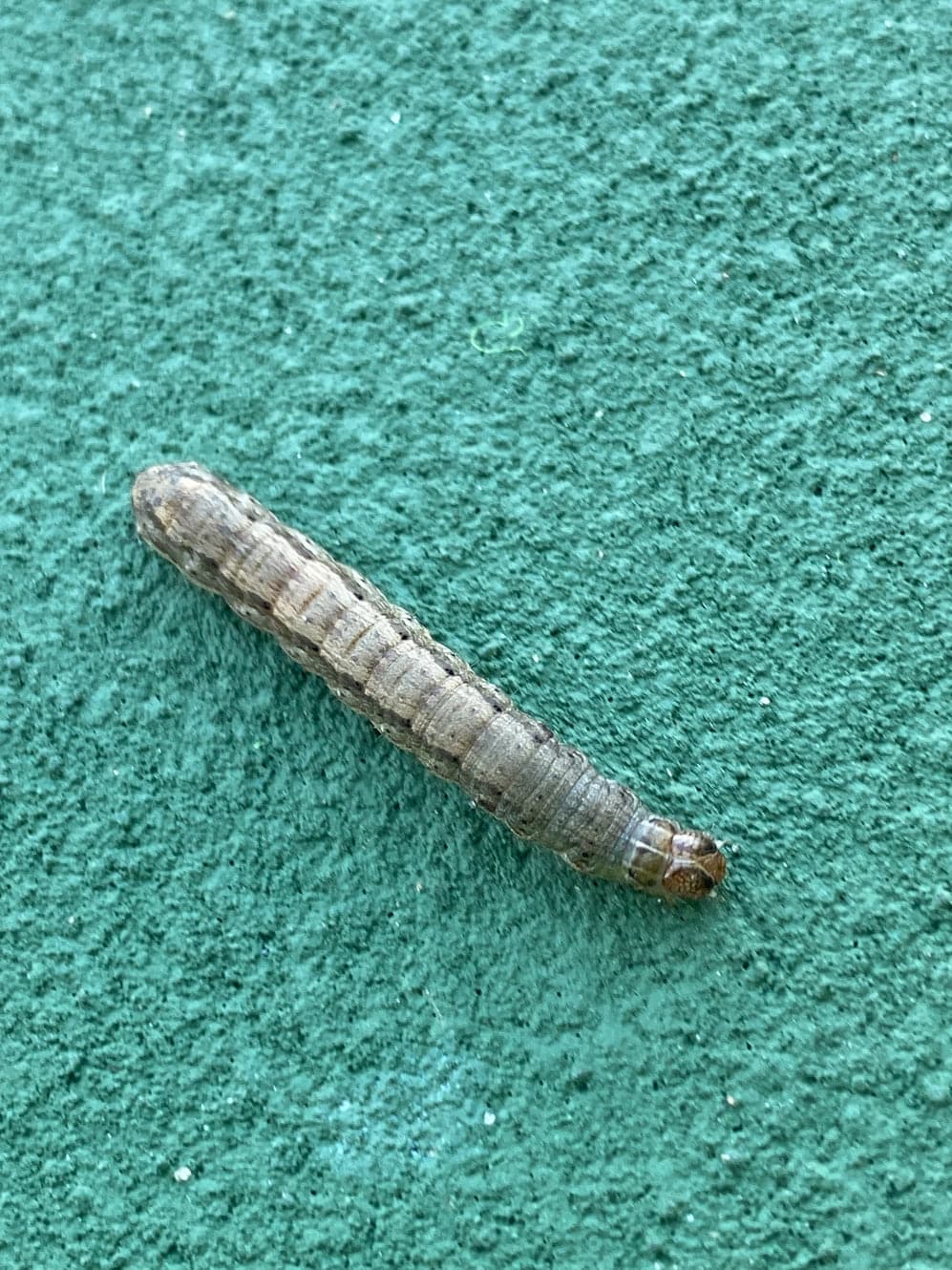
Fall armyworm
Spodoptera frugiperda
Larva to 1½ in
- When
- Late summer into early fall, often just after rain.
- Signs
- See-through blade tips, then leaves stripped away and brown patches within days.
White grubs
Phyllophaga crinita, Cyclocephala lurida
Larva to 1 in
- When
- Mid-summer to early fall, when the grubs are biggest. They stay in the top few inches of soil.
- Signs
- Brown patches that lift like a carpet, with few roots and creamy white, C-shaped grubs underneath. Skunks, raccoons or armadillos digging.
Photos, cropped and resized: southern chinch bug, Leila Dasher, iNaturalist observation 141076230 (Athens, Georgia), CC BY 4.0; tropical sod webworm moth, Donald Hobern, via Wikimedia Commons (Gainesville, Florida), CC BY 2.0; fall armyworm, iNaturalist observation 234146403 (Grand Prairie, Texas), CC0.

Facts: UF/IFAS Extension on the sod webworm (moth size) and chinch bug; University of Georgia Extension on the chinch bug and fall armyworm; Texas A&M AgriLife Extension on chinch bugs, sod webworms, armyworms (in lawns) and white grubs (in Texas turf).
Common questions
How much does insect control cost?
Is there a plan just for sod webworms?
How can I tell if insects are the problem?
What should I do if I see armyworms?
How soon will I see results?
What if the insects come back between visits?
Can I mow after a treatment?
When can people and pets go back on the lawn?
Found something in the grass?
Tell us what you’re seeing, and we’ll quote the treatment.
- No contracts
- Licensed & insured